Cart
0
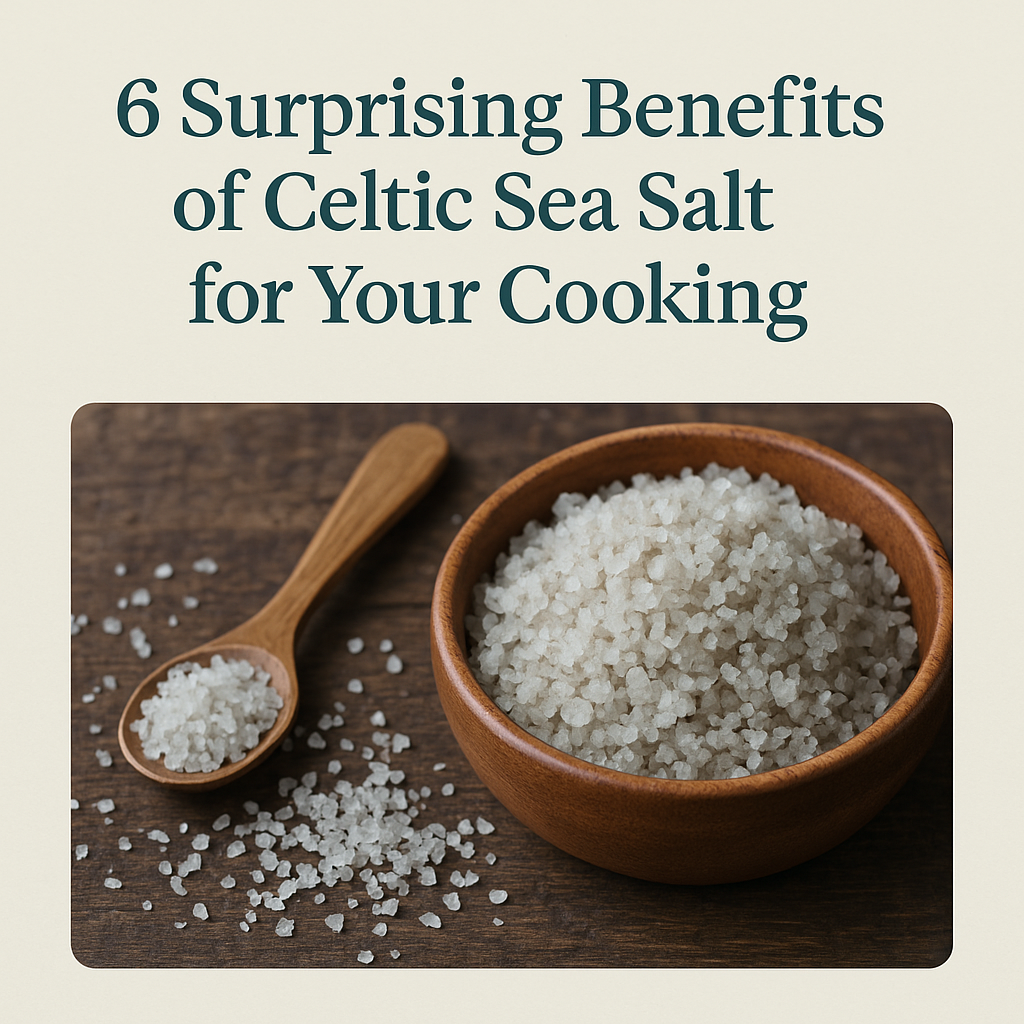
Celtic sea salt — also called grey salt or sel gris because of its soft grey colour — has a following among chefs and home cooks who want unprocessed flavour. It comes from the coast of Brittany in France, where it's hand-raked and sun-dried using traditional methods that keep its natural moisture and more than 80 trace minerals.
Regular table salt is refined and has its trace minerals removed. Celtic sea salt (grey salt) stays close to its natural form, and its soft grey colour comes from the clay beds it's harvested from. Here's what it brings to your cooking, and the benefits of grey salt that keep people coming back to it.
Benefits of Celtic sea salt in everyday cooking
1. It brings out the natural flavour of food
Most table salt tastes sharp and flat because it's pure sodium chloride. Celtic sea salt also contains magnesium, potassium, calcium and zinc, which round out the flavour. Food tastes more of itself rather than just "salty".
You'll notice it straight away on roast vegetables, grilled meat or eggs. The crystals dissolve slowly, so the flavour comes through gradually as you eat. You'll also find you need less of it to get the same effect.
2. It contains trace minerals
Alongside sodium chloride, Celtic sea salt contains small amounts of naturally occurring minerals such as magnesium, potassium and calcium. These are trace amounts, so it isn't a meaningful source of minerals in your diet, but they're part of what gives it a rounder flavour than refined salt.
Some people like to add a pinch to water after exercise, as a simple alternative to sports drinks with added colours and flavourings.
3. It has a long history in traditional cooking
Sea salt harvested this way has been part of French cooking for centuries. Salt in general plays a part in digestion, and some people like to add a small pinch of Celtic salt to warm water before meals as a traditional habit. If you have a digestive problem, though, speak to your GP rather than relying on salt.
4. It's useful after a sweaty day
You lose sodium when you sweat, which is why people who exercise hard, work outdoors or spend time somewhere hot sometimes add a little salt to their water, soup or broth. Celtic sea salt works for this the same way any salt does, with the bonus of its trace minerals and flavour.
Keep it to a small pinch. Most of us already get plenty of salt from food.
5. It improves texture and seasoning
Because it's sun-dried rather than oven-dried, Celtic sea salt stays slightly damp. That moisture helps it cling to food, so seasoning goes on evenly. Sprinkled over roast vegetables, steak or homemade chips, it melts slowly into an even layer of flavour.
Bakers use it in bread and desserts. A light sprinkle on cookies or caramel balances the sweetness without adding more sugar. The moisture also helps meat and vegetables stay juicy.
6. It's an easy swap for refined salt
This is one of the easiest changes you can make in the kitchen. Because the crystals are coarse and slightly damp, a spoonful of Celtic sea salt contains a little less sodium than the same spoonful of fine table salt. It has no additives or anti-caking agents.
It's still salt, though, so the usual advice applies: the NHS recommends adults have no more than 6g of salt a day, whichever kind you use. The advantage of Celtic salt is flavour, which can mean you're happy using a little less.
How to use Celtic sea salt day to day
You don't need to change how you cook. Use Celtic sea salt in place of your usual salt, in small amounts, and see how the flavour changes.
Use it for:
-
Seasoning meat, eggs and roast vegetables.
-
Finishing soups, salads and bakes.
-
A pinch in lemon water after exercise.
-
Herb salts with rosemary, thyme or garlic for quick seasoning.
FAQs: benefits of grey salt and Celtic sea salt
What are the benefits of grey salt?
Grey salt is another name for Celtic sea salt. Its main benefits are flavour and texture: it's unrefined, additive-free, and keeps natural trace minerals like magnesium, potassium and calcium that are stripped out of regular table salt. These give it a rounder, less sharp taste, and its natural moisture helps it cling to food for more even seasoning.
What are the benefits of Celtic sea salt?
Celtic sea salt is unrefined, additive-free, and brings out the natural flavour of food rather than just tasting "salty". It contains trace minerals, has a long history in traditional French cooking, and its texture means it seasons more evenly than fine table salt. See the full list of benefits above.
Is grey salt the same as Celtic sea salt?
Yes. "Grey salt" and "sel gris" are other names for Celtic sea salt. The grey colour comes from the natural clay beds on the Brittany coast where it's hand-harvested and sun-dried.
Conclusion
Celtic sea salt is an unrefined, additive-free salt with trace minerals and a rounder flavour that brings out the natural taste of food.
At SAHZ we sell authentic, hand-harvested Celtic sea salt (grey salt) from the coast of Brittany, France. Each batch is naturally dried and packed to keep its minerals and moisture.
If you'd like to cook with a natural, unrefined salt, have a look at our collection.